
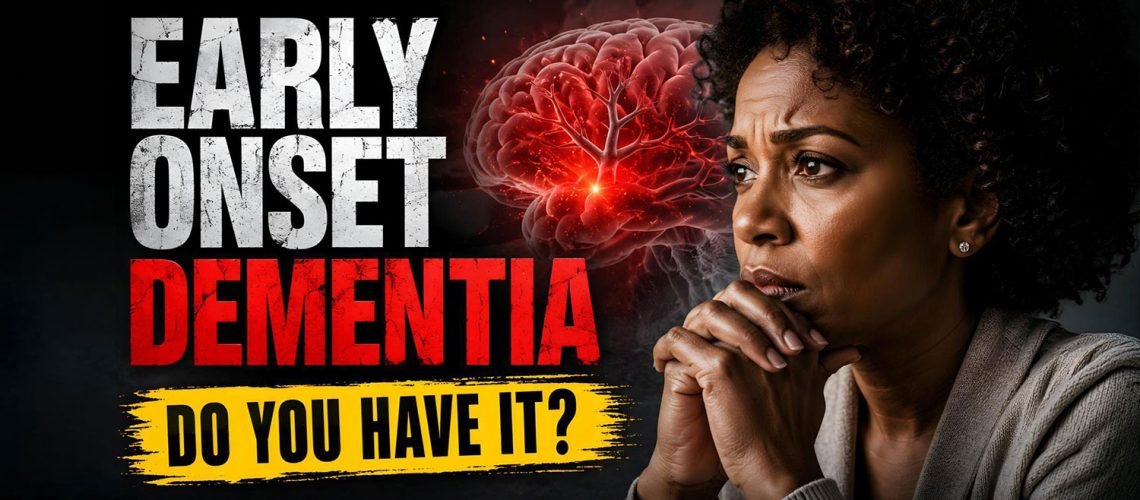
Most people picture dementia as something that happens to someone in their 80s. But early-onset dementia — what doctors increasingly call young-onset dementia — can begin as early as someone’s 30s, and it’s diagnosed most often in people in their 40s, 50s, and early 60s. On the podcast I call it “Big Daddy D,” because if we’re going to talk about it, we might as well take some of its power away first.
If you’re reading this because something feels off with a parent, a sibling, or even yourself, here’s what you need to know — and what to do next.
What Is Early-Onset Dementia?
Early-onset dementia is any form of dementia — including Alzheimer’s disease, frontotemporal dementia, and vascular dementia — that’s diagnosed before age 65. That single distinction changes everything about how a family experiences it. A person with early-onset dementia might still be working full-time, raising teenagers, carrying a mortgage, or providing for aging parents of their own. The financial, professional, and family disruption hits differently than it does for someone already retired.
How Common Is Early-Onset Dementia?
It’s rare, but not as rare as people assume. The Alzheimer’s Association estimates about 200,000 of the 5.7 million Americans living with Alzheimer’s have a younger-onset diagnosis. Looking at all causes of dementia globally, not just Alzheimer’s, a large-scale review of studies covering nearly 2.8 million people found an age-standardized prevalence of about 119 per 100,000 people ages 30 to 64 — roughly 1 in 840 people, or an estimated 3.9 million people worldwide. That’s not a rounding error. That’s a lot of families navigating this without a script.
Who’s at Higher Risk
Family history
If dementia or Alzheimer’s runs in your family, don’t assume it “skipped a generation.” That’s a comforting story a lot of families tell themselves, and it isn’t reliable. If a parent, grandparent, or sibling had early-onset dementia, that’s worth a direct conversation with your doctor about your own risk and, in some cases, genetic counseling.
Medical history
Past head trauma — even an injury that seemed minor at the time — along with Parkinson’s disease and Huntington’s disease are all associated with higher risk. If any of these apply to you or a loved one, ask a neurologist about proactive cognitive screening rather than waiting for symptoms.
Lifestyle and health factors
Elevated body mass, smoking, and chronic work-related stress have all been linked to higher rates of early-onset dementia in working-age adults. None of these guarantee a diagnosis. But they’re modifiable, and modifiable is worth acting on.
Race and disparities
This is a conversation the broader caregiving industry doesn’t have often enough. CDC research on Medicare data found older Black Americans have the highest prevalence of Alzheimer’s and related dementias of any group studied — about twice the rate of white Americans. Families in this community are also, on average, diagnosed later and supported by fewer culturally responsive resources. That gap is a big part of why this show exists.
A Story I Tell on the Podcast
I’ve talked before about my own sister, who was diagnosed with Alzheimer’s in her 50s. Looking back, the signs were there years before the diagnosis — she just knew how to cover for them.
She was concealing what she was forgetting. She kept asking, “How did we get here?” She knew something was wrong before anyone else did, but she couldn’t name it. She started writing everything down. She couldn’t find her keys — the ordinary kind of thing everyone laughs off, until it isn’t ordinary anymore.
By the time she was 64, she’d stopped eating enough. Her weight loss reached a point where her doctors warned that losing much more would move her into a different, more serious care category. That’s when we moved, urgently, to get her properly diagnosed.
I share this not to scare you, but because I know how easy it is to explain these moments away — as stress, as a bad week, as “she’s just tired.” Families rarely catch early-onset dementia from one symptom. It’s the pattern — memory lapses, concealment, changes in eating, changes in mood — that should send you to a doctor.
Behavioral Changes Families Aren’t Prepared For
Two things catch families off guard most.
Denial
Many people with early-onset dementia don’t recognize what’s happening to them, or actively resist the idea. This isn’t stubbornness — it’s often a direct effect of the disease itself, something called anosognosia. Expect it, and don’t take it personally.
Sudden shifts in mood or behavior
Personality changes, irritability, even aggression can appear with little warning, and they tend to escalate if the underlying condition goes unaddressed. If you’re seeing this, it’s a sign to move toward a diagnosis, not away from it.
What to Do If You’re Seeing the Signs
- Start with a primary care visit. Bring written notes — specific symptoms, when they started, how they’ve changed, and any family history.
- Ask for a specialist referral. A neurologist or geriatrician who specializes in dementia can order the right cognitive and imaging workup.
- Go to appointments together. Your loved one may downplay or forget to mention symptoms. You’re there to fill in the gaps, not take over the conversation.
- Document the pattern, not just a single incident. A dated log of what you’re noticing is genuinely useful to a physician.
- Expect the process to take time. Multiple visits and tests are normal. A diagnosis is the door to planning, benefits, and support — it’s worth the wait to get it right.
Frequently Asked Questions
What is the youngest age someone can be diagnosed with early-onset dementia?
Cases have been documented in people in their 30s, though diagnosis becomes more common from the mid-40s onward. By definition, “early-onset” or “young-onset” means any diagnosis before age 65.
Is early-onset dementia hereditary?
Sometimes. Certain genetic mutations are directly linked to early-onset Alzheimer’s, and family history raises overall risk. But most cases don’t have a single identifiable genetic cause. A family history conversation with your doctor is always worthwhile.
Is early-onset dementia the same as early-onset Alzheimer’s?
No. Alzheimer’s is the most common cause of early-onset dementia, but frontotemporal dementia, vascular dementia, and other conditions can also appear before age 65.
What are the first signs of early-onset dementia?
The earliest signs are often subtle: short-term memory lapses, difficulty finding words, misplacing items repeatedly, withdrawing from tasks that used to be routine, and changes in mood or judgment. What matters most is the pattern over time, not any single moment.
How is early-onset dementia diagnosed?
Through a combination of cognitive testing, neurological exam, bloodwork to rule out other causes, and brain imaging, typically coordinated by a neurologist or geriatrician after a referral from primary care.
You Don’t Have to Navigate This Alone
If any part of this sounds like what you’re watching happen to someone you love — or to yourself — the next right step is a conversation with a doctor, not a Google spiral at 11pm. And if you want to talk through your specific situation with someone who does this for a living, that’s exactly what a consultation with me is for.
Listen to the full episode of The Senior Advocator, and download the free First 30 Days Checklist at senioradvocators.org.
This article is for educational purposes and isn’t a substitute for a diagnosis or medical advice from a licensed physician. If you’re concerned about symptoms in yourself or a loved one, please consult a doctor.
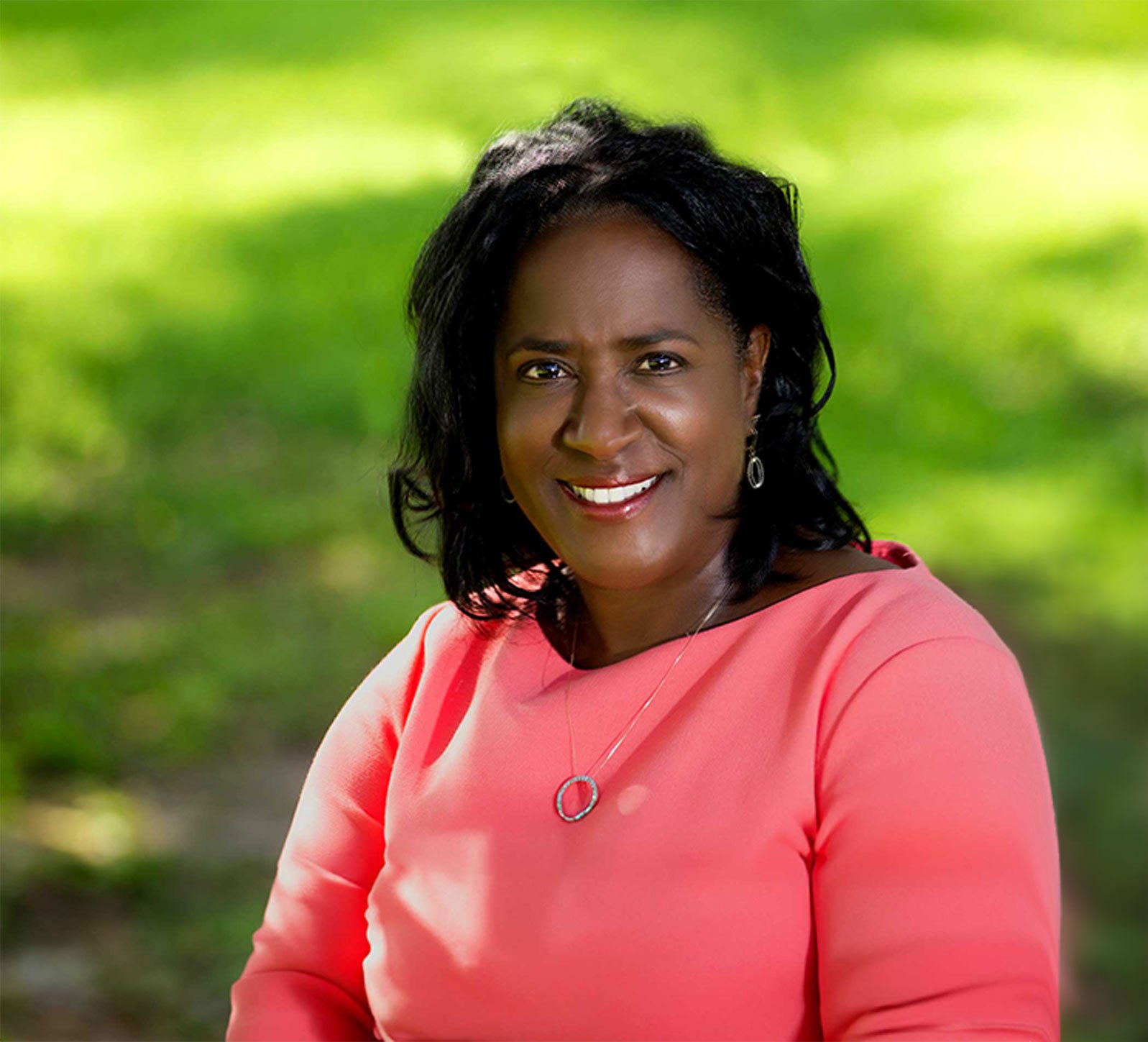
Ginell Butler is a Gerontologist and is the Executive Director of Senior Advocators, Inc. a private consulting firm that advocates for social services, Geriatric healthcare and finances for the elderly and aging since 2013. Ms. Butler holds a Master of Aging Services Management (MASM) from the University of Southern California (USC) Leonard Davis school of Gerontology. Ms. Butler also holds a Master of Science Administration (MSA) degree from California State University, Dominguez Hills and a BA degree in Social Ecology from the University of California, Irvine. (Read full Bio)